
Roots of Stone
York
A voice from 867 AD calls on you to bind runes at sites of power - but each step reveals a deeper deception, and the fate of York’s history lies in your hands.
Learn more
INTERACTIVE CITY TOURS BY URBAN TRAILS™
Medieval streets, Roman walls, riverside walks - and a city centre that rewards slow exploration. Start with the big landmarks, then follow the lanes, viewpoints, and hidden corners that make York feel immersive.
Make Memories Together
Step Into the Story
On Your Schedule
York is a historic city with a compact centre that’s easy to explore on foot. Much of the experience sits within a short walk: the Minster, the old city walls, riverside paths, and a network of narrow streets that still feel distinctly medieval. It’s busy at peak times, but the layout makes it easy to step off the main routes into quieter lanes, small courtyards, and independent shops. If you are planning things to do in York, it works well as a day trip, but it also rewards a slower visit with time for museums, walking routes, and evening atmosphere.
If you are searching for things to do in York, build your plan around the headline sights, then add a wall walk or river loop to connect everything together. These three angles give you a strong first visit.
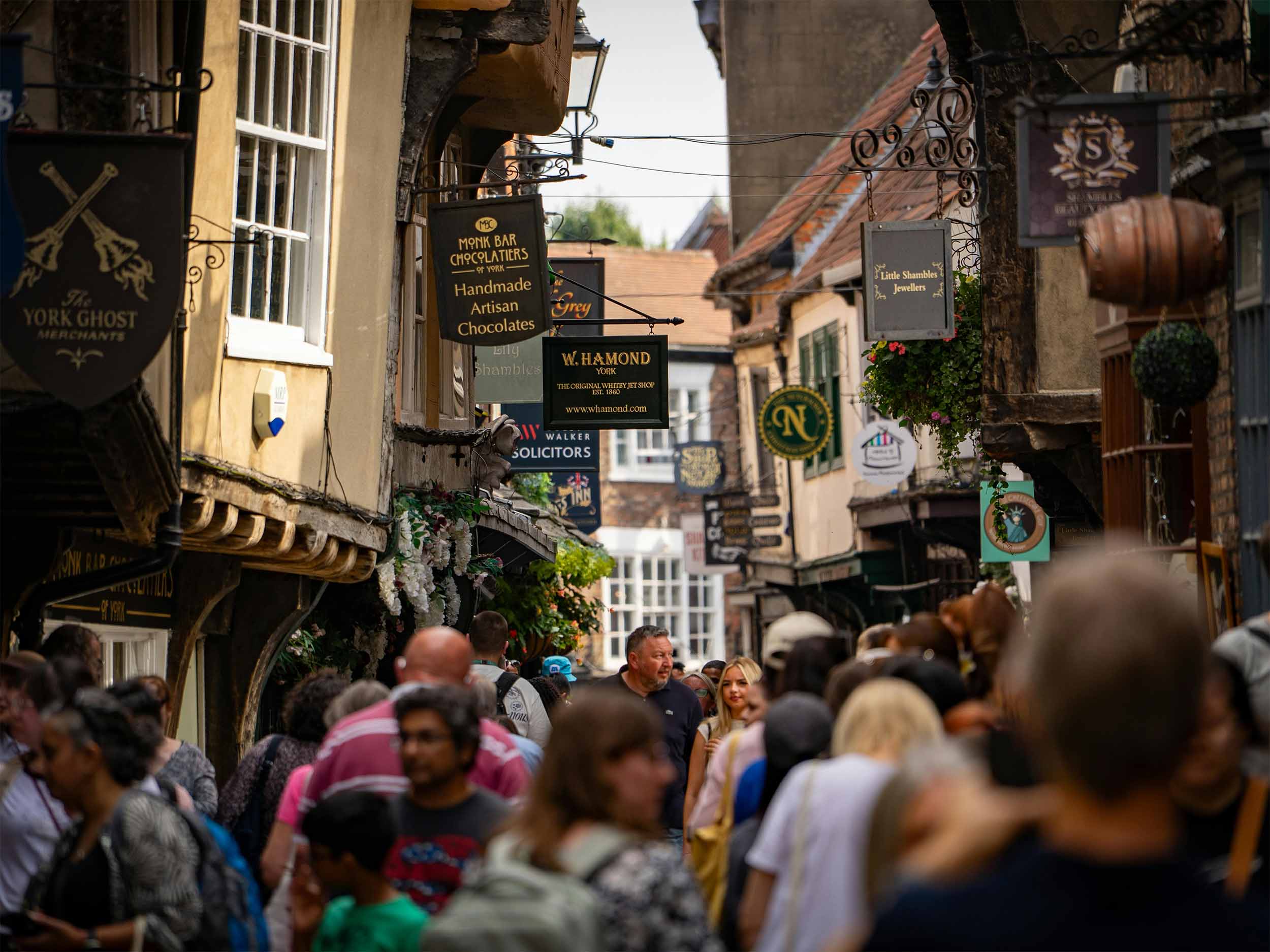
York Minster is the centrepiece, and the area around it is made for wandering. Walking sections of the city walls is one of the simplest ways to understand York’s shape and history, with frequent viewpoints over rooftops and streets below. In the centre, you will also find the Shambles, a narrow medieval street that is often crowded but still worth seeing, especially earlier in the day.
York has a strong museum offer, so you can add context to the city beyond the buildings. The Jorvik Viking Centre is well known for bringing Viking-age York to life, while the National Railway Museum is a major draw if you want something broader and more modern. If you prefer smaller stops, there are galleries and historic houses within the centre that fit neatly into a walking route.
Follow the River Ouse for an easy, scenic walk that still feels central, or cross to the quieter riverside paths when the city streets get busy. For a calmer green space, the Museum Gardens are a good reset point near the walls and the river. If you want a viewpoint and a slightly different atmosphere, explore the smaller streets around Clifford’s Tower and the area near the castle.
York is ideal for exploration because it layers landmarks with moments of discovery. You can walk from the Minster to the walls to the riverside in minutes, then lose time in narrow lanes that twist and reconnect in unexpected ways. Treat it like a self-guided walking tour with a bit of intention: pick a loop, take a wall section, drop back into the streets, then finish by the river. The details do a lot of the work here - stonework, plaques, old shopfronts, and the way the streets tighten and open out as you move.
York’s centre is best explored on foot, and many streets are pedestrian-friendly, but it can get crowded, especially around the Minster and the Shambles. Earlier starts help if you want a quieter walk. Comfortable shoes are useful for uneven paving and longer wall sections. The train station sits close to the city centre, so it’s easy to arrive and start walking immediately. If you are staying further out, local buses and taxis are available, but most visitors can cover the main sights without needing transport.
Urban Trails in York turns the historic centre into a playable route: self-guided exploration with story beats, location-based puzzles, and player choices that shape what happens next. It’s designed to complement classic York sightseeing while giving you a more interactive way to explore the streets, landmarks, and hidden corners.
York
A voice from 867 AD calls on you to bind runes at sites of power - but each step reveals a deeper deception, and the fate of York’s history lies in your hands.
Learn more